Method 1
HP45 thermal inkjet cartridges
Crystal ink in a standard HP45-format thermal cartridge. It drops into the coder already on your line or a desktop printer for samples. No new station, no new head.
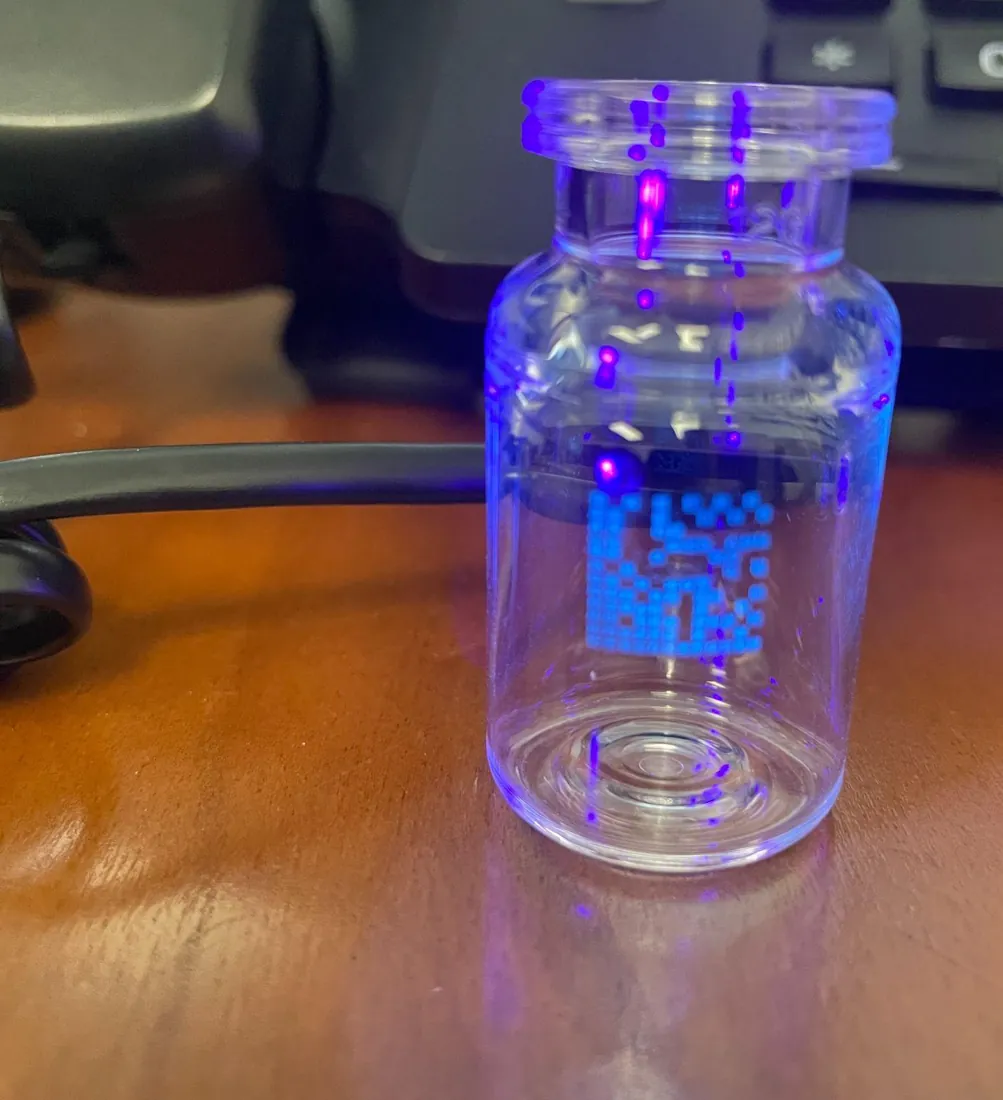
- Demonstrated at 800 units a minute on pharmaceutical vials
- Crystals about 0.3 µm, small enough to jet without clogging. Conventional security phosphors are a micron and larger, too big for inkjet heads
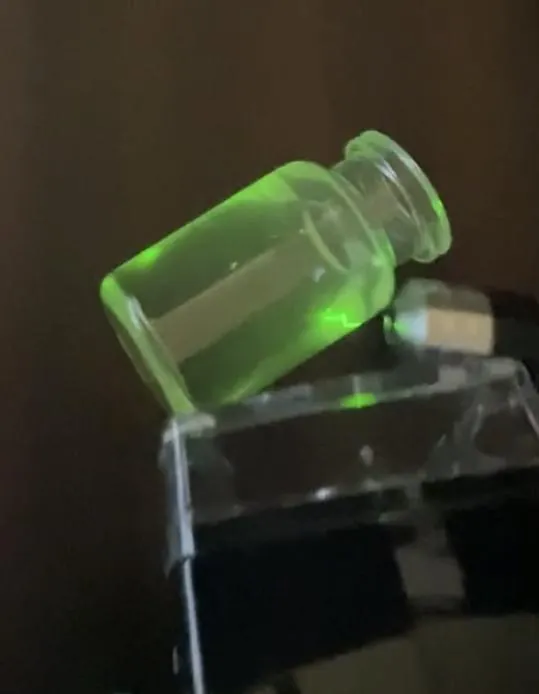
- Two layers in one mark: a UV-visible code anyone with a flashlight can check, and a covert crystal only our reader can measure
- Data-matrix, QR, serial numbers, lot codes and logos
Best for: cartons, labels, vials, caps and paper, and pilot runs that start on a desk and move to the line unchanged.
Method 2
Continuous, UV-cured, non-contact
A continuous inkjet head prints crystal ink across an air gap, and a UV LED lamp cures it a moment later. The head never touches the product, so it prints on almost any surface at line speed.
- Non-contact: curved, ribbed and uneven surfaces, filled containers and finished parts
- Any surface: glass, plastics, coated metal, cans, cartons and labels
- Cured in a flash: dry, durable and rub-resistant before the next station
- Runs continuously on moving lines, with the same crystal and the same reader
Best for: bottles, cans, glass and metal parts, and anywhere a cartridge printer cannot reach the surface.