Luxury gets copied because the logo is the product. NovaVera adds a second identity the shopper never sees and a counterfeiter cannot copy: in the frame ink, the lens resin, the thread, the leather finish and the box.
40 nmcrystals inside a lens, with no change to clarity
300 ppmstill read strongly in lens resin
1of the world's largest eyewear makers is working with us
The challenge
Why the usual features fall short
Visible brand marks, holograms and NFC tags can be bought, copied or moved from a genuine item to a fake. Lenses cannot carry an RFID chip, and the things counterfeiters copy most, frames, lenses and fabrics, have to look exactly as before.
Where NovaVera fits
Built into the material
Crystals ride in the pad-printing ink of a frame mark, are dispersed through the lens resin, spun into a thread or added to a finish. The product looks the same. A phone confirms the brand; a reader confirms the lot; a camera can map the random pattern for item-level identity.
Practical applications
Frame marks printed in crystal ink
Lens resin with a 40 nm crystal identity
Threads and fibers spun with crystals
Watch cases and jewelry, including gold alloys (in development)
Boxes, foils and seals that match the product inside
Luxury goods
Proof that travels with the piece.
Luxury goods get copied because the logo is the product. We add a second, invisible identity to the materials themselves: the ink on a frame, the resin of a lens, a thread in a seam, the print on a presentation box. A counterfeiter can copy what they see. They can't copy what they can't see.
Working with one of the world's largest eyewear makers.
Frames could already be tracked with RFID. Lenses can't carry an RFID chip, and they are what counterfeiters copy. The lens had to stay exactly as clear and as good as before.
ReaderScanning…Move the light over the frame
Drag across the picture to aim the reader, or let it scan on its own. Illustration; no brand marks shown.
FramesCrystal in the pad-printing ink
The mark sits in the ink already used to print on the frame. We built a handheld reader for this program, then a second version with higher sensitivity and eye-safety certification.
Lenses40 nm crystals in the lens resin
Custom surface chemistry keeps the crystals dispersed in standard lens resin without changing the lens's clarity or function. Tested from 300 to 3,000 ppm; the signal was strong even at 300 ppm.
NextA fingerprint for every lens
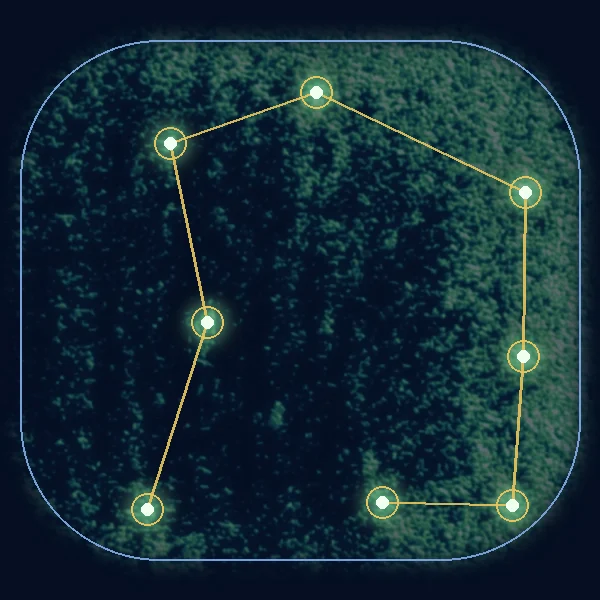
The crystals land in a random pattern no one can reproduce. A camera maps the brightest points into a "constellation", and in early trials a rescanned lens was matched to its own record. Yes/no checks are ready to scale; lens-by-lens serialization is in development.
From crystal to fingerprint
How a lens gets an identity no one can copy.
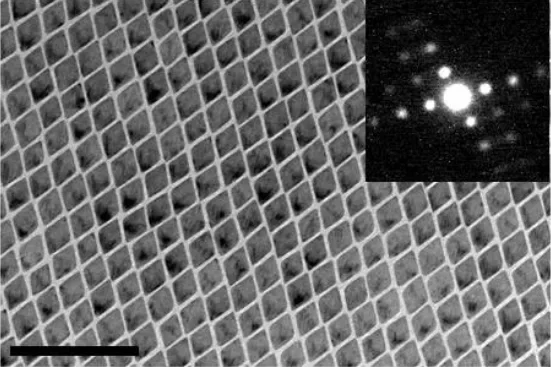
Grown to one shapeIMS synthesis science makes every crystal the same size and shape. These plates are from a 2013 Nature Chemistry paper co-authored by IMS.
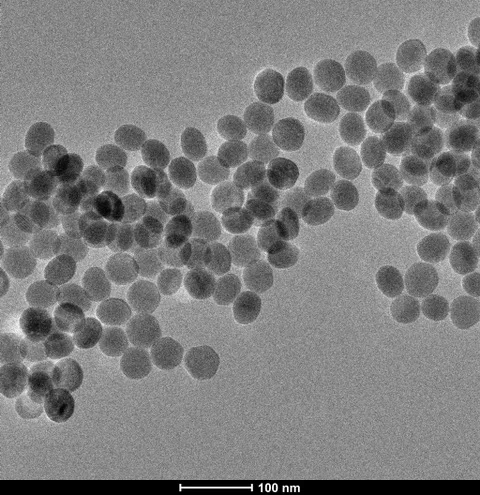
Made for the lensThe 40 nm crystals made for this program, by electron microscope. Scale bar 100 nm.
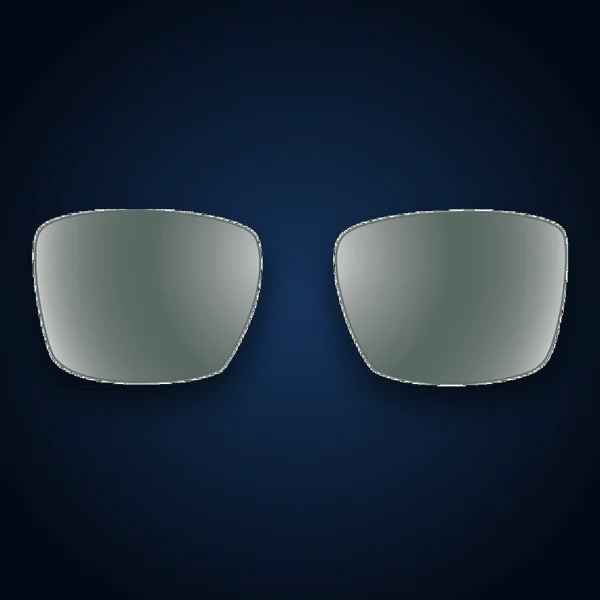
Inside the lensDispersed through the lens resin. To the eye, the lens is unchanged.
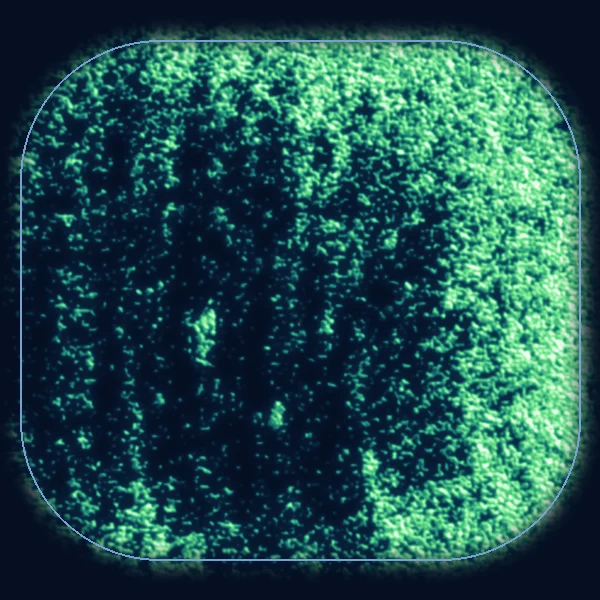
Under the readerA lab camera scan of a tagged lens. Every glowing speck is crystal. Real data, recolored.
The fingerprintThe brightest points form a constellation that belongs to that one lens.
Ready to evaluate NovaVera for Luxury Goods & Apparel? We work directly with technical evaluators and procurement teams, from the first sample to full production.