The recipe is the code
Different crystal recipes designate origin, SKU, factory, brand and year. Readers tell them apart in the field, even when several are combined in one product.
OriginSKUFactoryLineBrandYear
Solutions · Traceability
Embedded signatures persist through processing, distribution and sale. Unlike digital-only track-and-trace they cannot be spoofed, reassigned or lost: each product carries its own provenance, checkable anywhere without relying on database integrity.
Two levels of trace
Choose how fine the trace needs to be. Batch codes come from the crystal recipe. Item fingerprints come from where the crystals happen to land.
Different crystal recipes designate origin, SKU, factory, brand and year. Readers tell them apart in the field, even when several are combined in one product.
The crystals in each mark land at random. A camera captures that pattern as a LightMap™, signs it and prints it in the item's own barcode: a unique optical fingerprint per unit, with no database.
How LightMap™ works →Watch it work
The recipe goes in once. Every item from that batch answers the reader with the same code: plant, line, SKU and year. Look closer and no two items are alike, because the crystals land at random. That pattern is the item’s own fingerprint.
You chose the crystal · here is what one does
Case study · a global fiber manufacturer
A global fiber manufacturer adds our crystals to one expensive ingredient on its spinning lines. The same invisible code now measures that ingredient live, saves more than $2 million a year, and proves every bale is genuine, from the plant to the border.
An invisible code
In daylight the fiber looks and handles exactly the same. Under the reader's laser, the crystals light up with the customer's own colors and timing. Move the reader over the fabric.
Follow one fiber · scroll
The same crystal does every job. It is added once, in one ingredient, and then read wherever the fiber goes: in the plant, at the customer's mill, in another market and at the border.
The fiber maker gets a crystal of its own. It goes into one ingredient at 500 parts per million, and that ingredient goes into the fiber at about 1%. Nothing else on the line changes.
Crystals in the finished fiber: invisible, and the same in every bale.
The crystal signal tracks the ingredient, so a reader at each of the seven injection points shows the dose live. If the ingredient drops below 1%, the fiber breaks. Without a live reading, the line ran at 1.5% to be safe. Now it runs at 1.05%.
Saved on one ingredient. Figures reported by the customer.
We build custom readers that find this customer's crystals at very low concentrations. A bale with the code is genuine. A copy has no code, however good it looks.
Brands buy the fiber, but their garments are knitted at third-party mills. The fiber maker supplies readers to its customers, so a brand can check that each mill it sources from is really using the fiber the brand paid for.
Each of the manufacturer's twelve plants around the world gets its own crystal. When fiber turns up somewhere it was never meant to be sold, a reader shows which plant made it and which market it was made for. The same code can go down to the line or the machine, so quality and warranty teams know exactly where an item came from.
Customs agents have readers as well. A shipment declared as genuine fiber can be checked on the spot, before it enters the market.
Next: a phone check for shoppers (below).
Job 1 in detail · operations
The ingredient keeps the fiber from breaking, and it is expensive. Without a way to see it, the only safe choice was to add far too much. With a reader at each injection point, the plant sees the real dose and runs just above the limit.
Set high, because no one could see the real dose.
Going from 1.5% to 1.05% uses 30% less of the ingredient.
More than $2 million a year on one ingredient, as reported by the customer.
Three ways one code pays
Most anti-counterfeiting costs money and only pays off when something goes wrong. Here the same crystal pays its way on the line every day, and the protection and marketing come with it.
The same crystals that customs and mills read today will be checkable by the shopper. Hold a phone over the garment and it confirms the fiber is genuine, then tells the story of where it was made.
Hold the phone over the fabricNo label to find, no code to type.
The crystals answerThe phone reads the fiber's own invisible code.
Genuine, and from whereThe plant and the story behind the fabric, straight from the brand.
In development. The consumer reader and app are not yet available; details will be announced.
Your expensive ingredient
Anywhere one costly ingredient goes into a product at a set ratio, a crystal in that ingredient can show the real dose, and then carry the brand's code for the rest of the product's life. These are ideas we would like to test with partners.
See the let-down on the line, not after a failed batch.
Confirm the additive went in at the right level, part by part.
Show the additive package is there, and at strength.
Check that two-part mixes were blended right.
Have an expensive ingredient?
Tell us what goes into your product and where it goes after. We will design a crystal, a reader and a plan to measure, protect and trace it. NovaVera Corp. supplies the crystals and readers.
Metals
Stamps wear off, serial numbers get machined away, and everything is lost when metal is melted and recast. So we put the identity in the alloy itself, where it survives casting, rolling, machining and recycling.
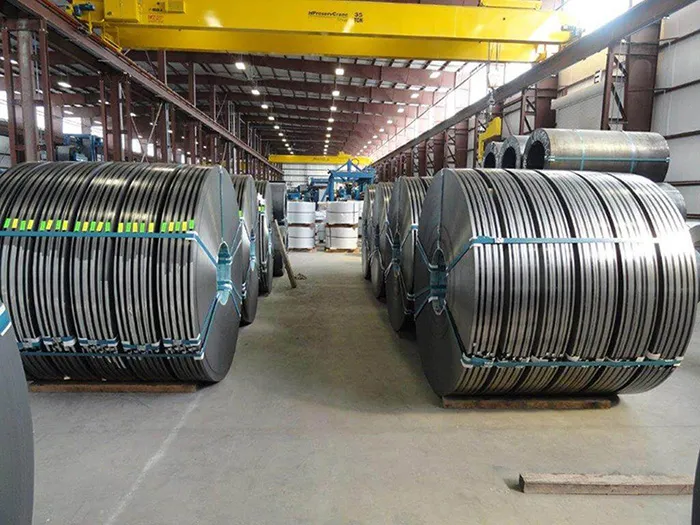
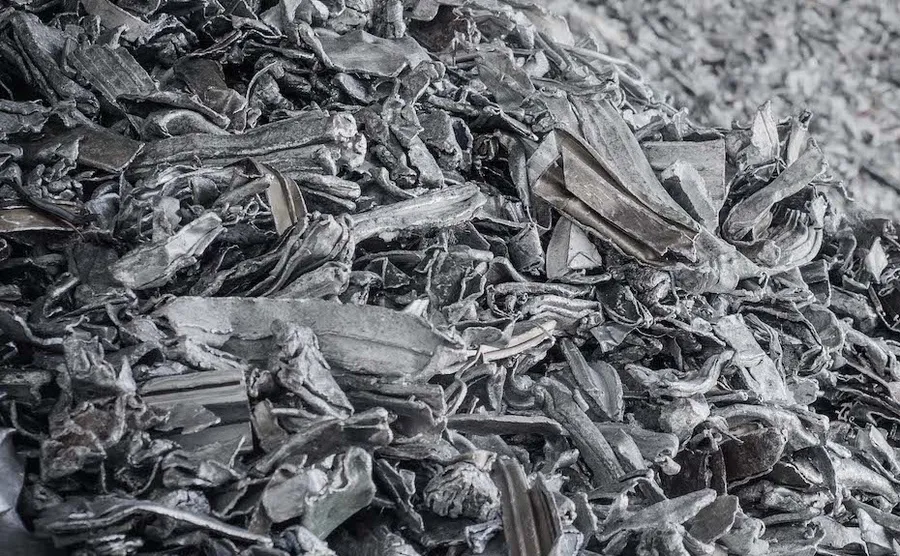
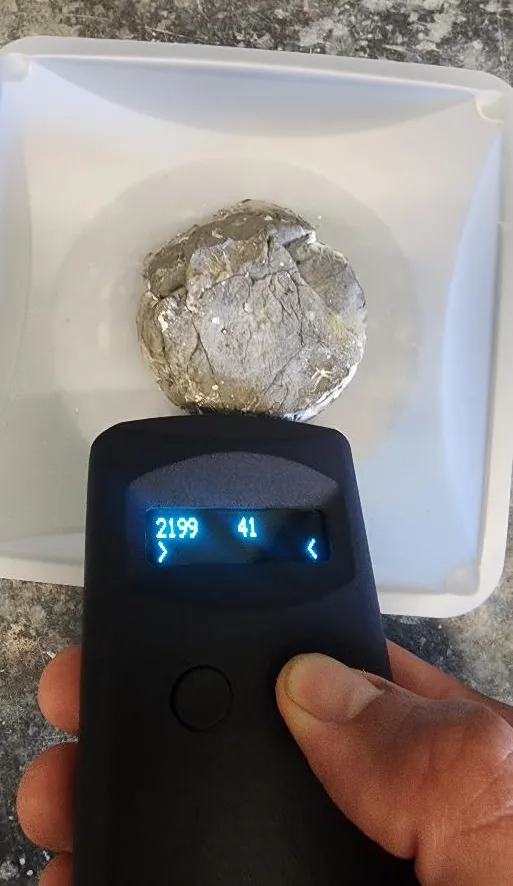
The producer enriches its alloys with Intelligent Material. When scrap returns, measuring the crystal tells them where the metal came from and how much of it is their own recycled content, and flags dilution or substitution.
Different crystals mark different product lines, so the same check separates structural from non-structural alloys, and lower-carbon from standard metal.
Protecting the optical core
Molten metal is hard on a tiny optical crystal. Heat alone isn't the problem; our crystals are thermally stable far above aluminum's melting point. The melt is also chemically aggressive, can pull particles into the dross, and can dim the glow at the crystal's surface.
So for metals the crystal is built in two parts. An optical core carries the code. A protective refractory shell wraps it, taking the contact with the melt while letting the reader's light through in both directions. The core stays readable after casting and remelting.
The reader looks at the glow after its light switches off, so the shine of bare metal and room light don't confuse it.
NovaVera works with central banks, pharmaceutical manufacturers, brand owners and more, from the first sample to full production. Tell us what you need to protect. We reply within two business days.